
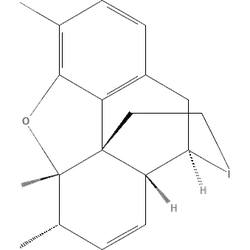
Normorphine Stats & Data
OC1C=CC2C3NCCC22C1Oc1c(O)ccc(C3)c12ONBWJWYUHXVEJS-ZTYRTETDSA-NMeasured Affinities
Guide to PHARMACOLOGYMeasured binding and functional data for normorphine, curated by the IUPHAR/BPS Guide to PHARMACOLOGY. Each row cites the paper it came from. Lower concentrations mean tighter binding — a value in the sub-nanomolar range indicates a very potent interaction.
| Target | Action | Measure | Value | Concentration | Species | Source |
|---|---|---|---|---|---|---|
| μ receptor OPRM1 | Full agonist | pKi | 8.8 | 1.58 nM | Human | PMID 9686407 |
| κ receptor OPRK1 | Full agonist | pKi | 7.8 | 15.85 nM | Human | PMID 9686407 |
| δ receptor OPRD1 | Full agonist | pKi | 7.1 | 79.43 nM | Human | PMID 9686407 |
Reading this. pKi, pEC50 and pIC50 are negative log molar values, so a higher number means a tighter interaction; the concentration column converts them for you. Values from non-human species are laboratory measurements and do not translate directly to human effect. Receptor affinity is not a dose — it describes what a molecule binds, not how much of it is safe to take.
Receptor data from the IUPHAR/BPS Guide to PHARMACOLOGY (v2026.2), licensed CC BY-SA 4.0. Matched to this substance by InChIKey.
Effect Profile
CuratedStrong euphoria with moderate itching/nausea, mild sedation
Tolerance & Pharmacokinetics
drugs.wikiTolerance Decay
Acute tolerance: develops within a single session — the reset numbers above apply after sustained heavy use, not after one binge. Within-session tachyphylaxis usually resets largely overnight.